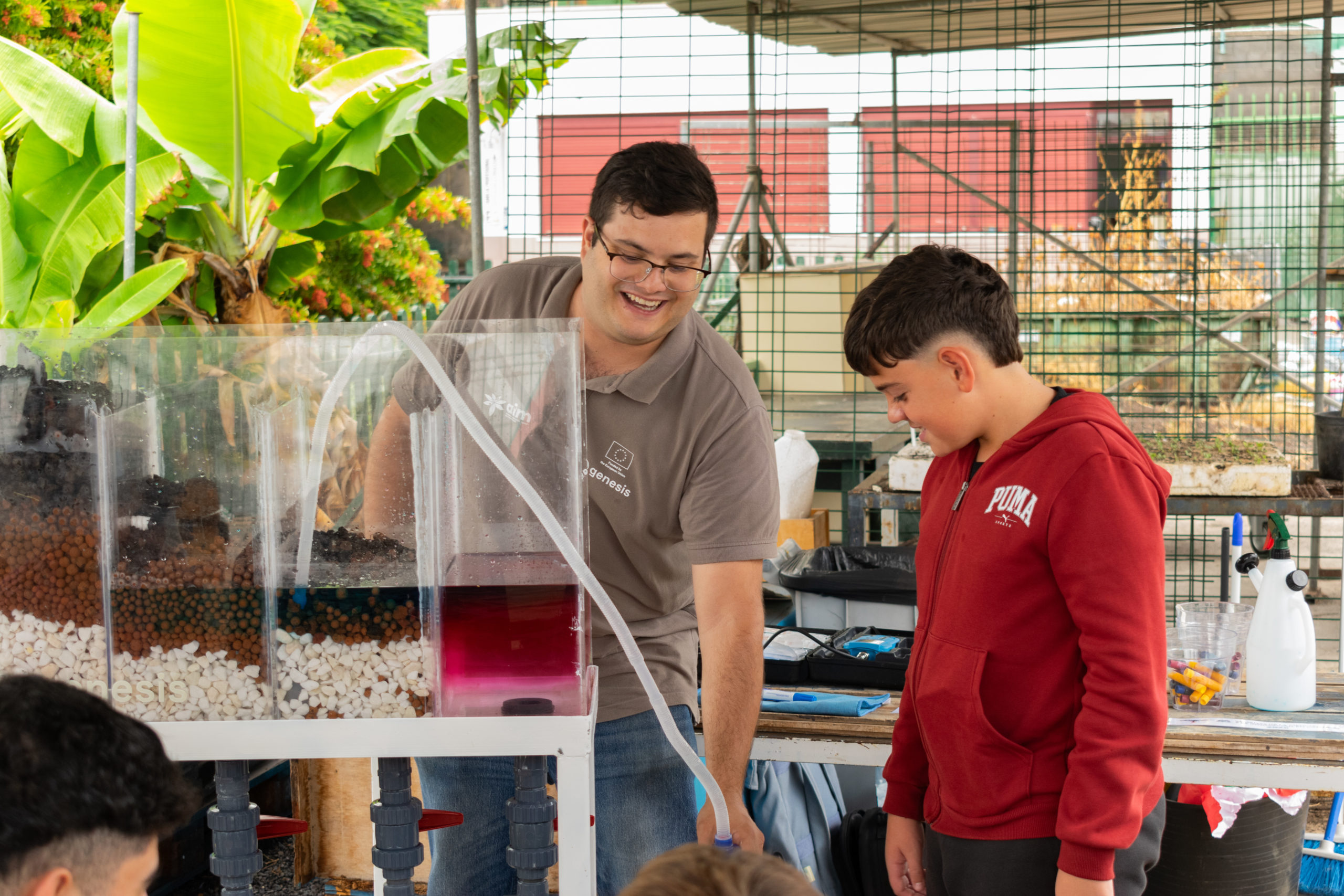
AIM took the GENESIS project to IES José María Pérez Pulido with a hands-on activity designed to explain how water works and is managed on the island.
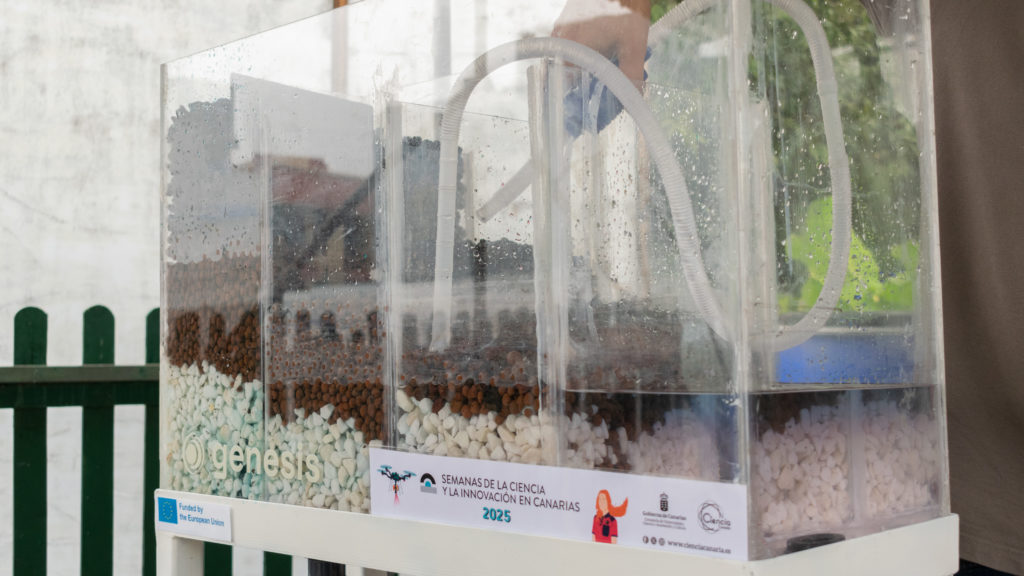
In November 2025, we took part in Science Week with an activity at the Instituto de Educación Secundaria (IES) José María Pérez Pulido, in Los Llanos de Aridane. Organised by AIM and in collaboration with La Palma Research Centre (LPRC), We brought one of the educational activities from the GENESIS project into the classroom to work with the pupils on the topic of groundwater and to learn a little more about how this resource is obtained and managed on La Palma.
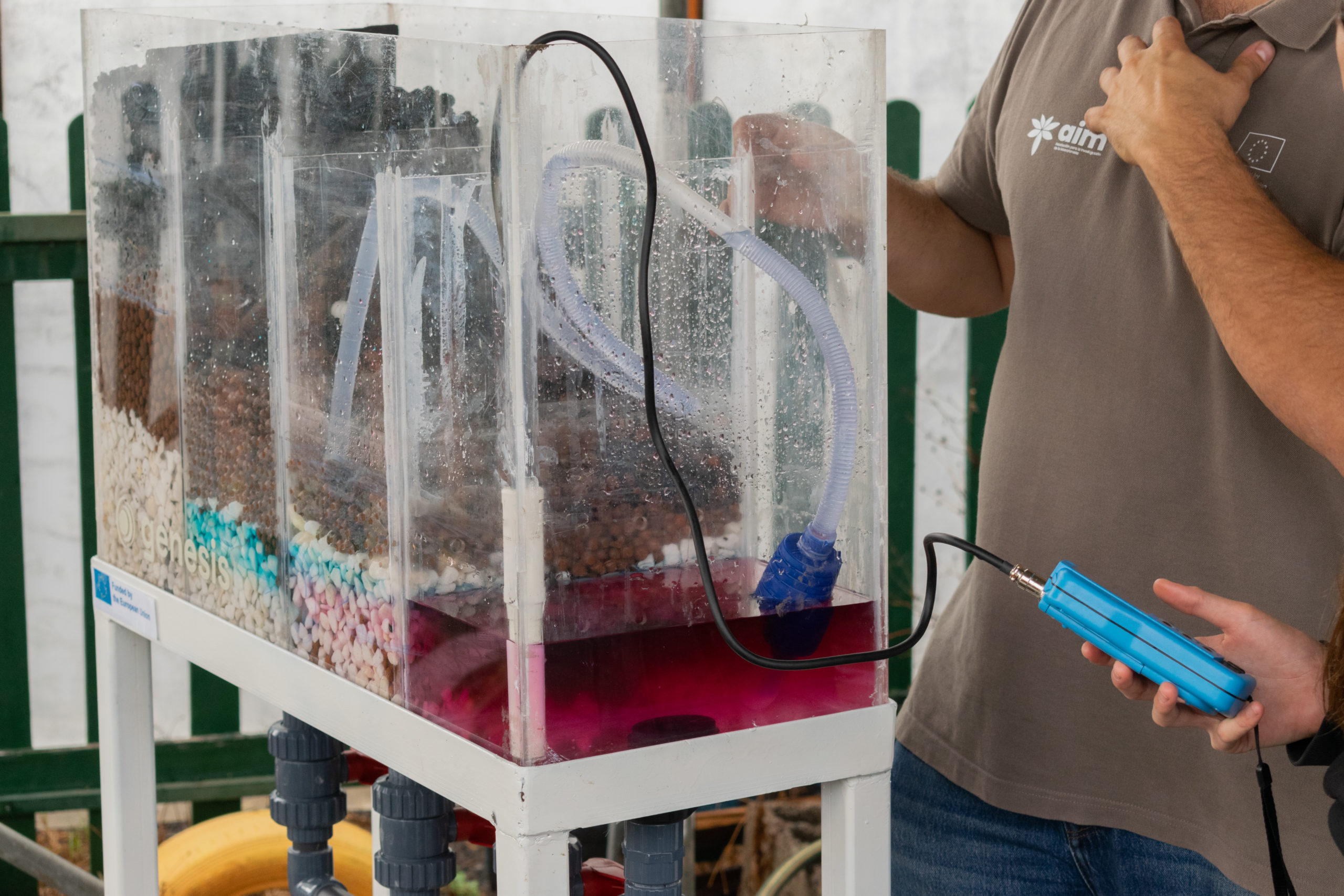
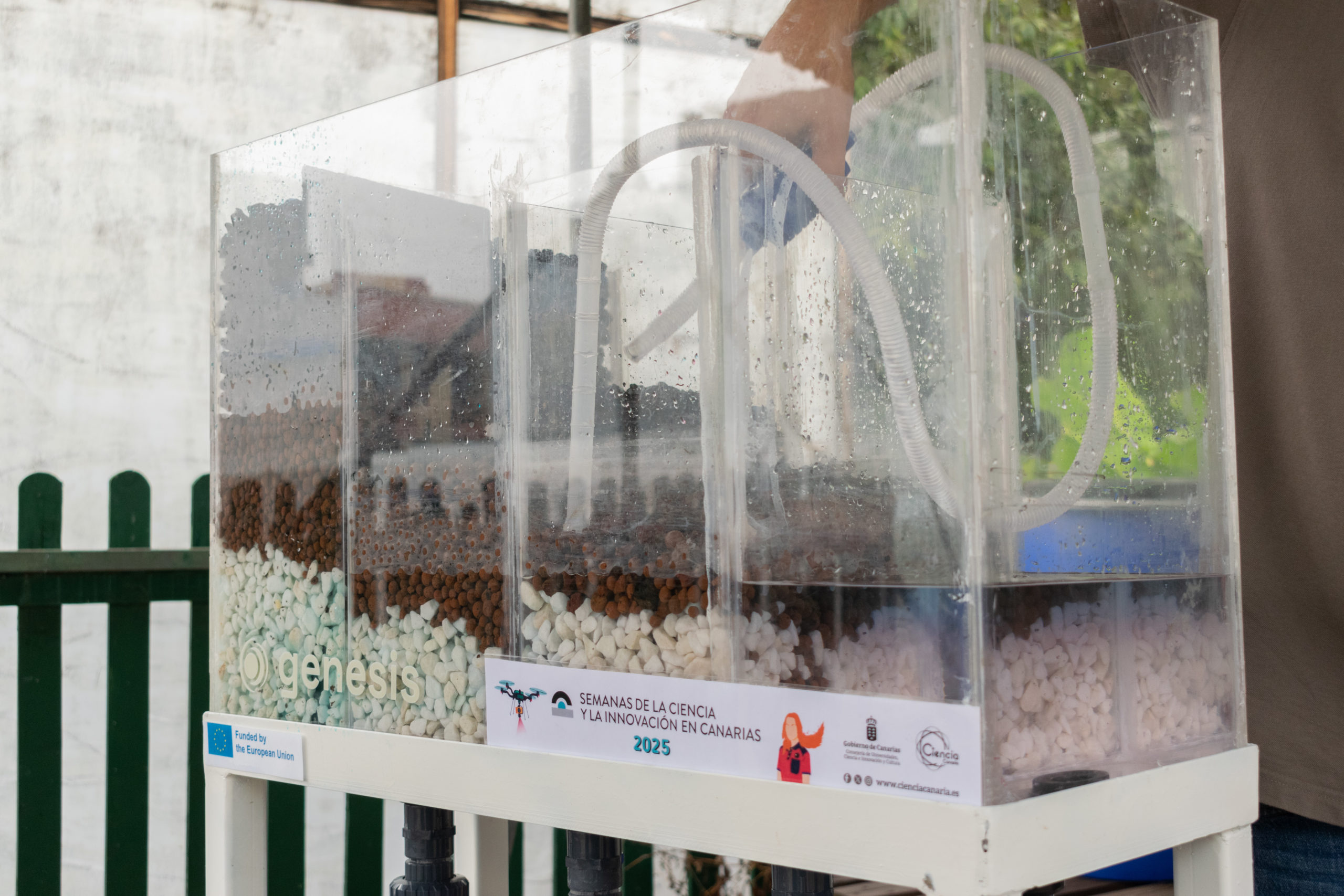
The hydrogeological model once again served as our starting point. Using it, we were able to trace the path of water from the moment it falls onto the surface and begins to seep into the ground, right up to the aquifer. From there, we discussed the tunnels and wells – two types of infrastructure that are very common on La Palma – which enabled us to explain how we access the water stored underground.
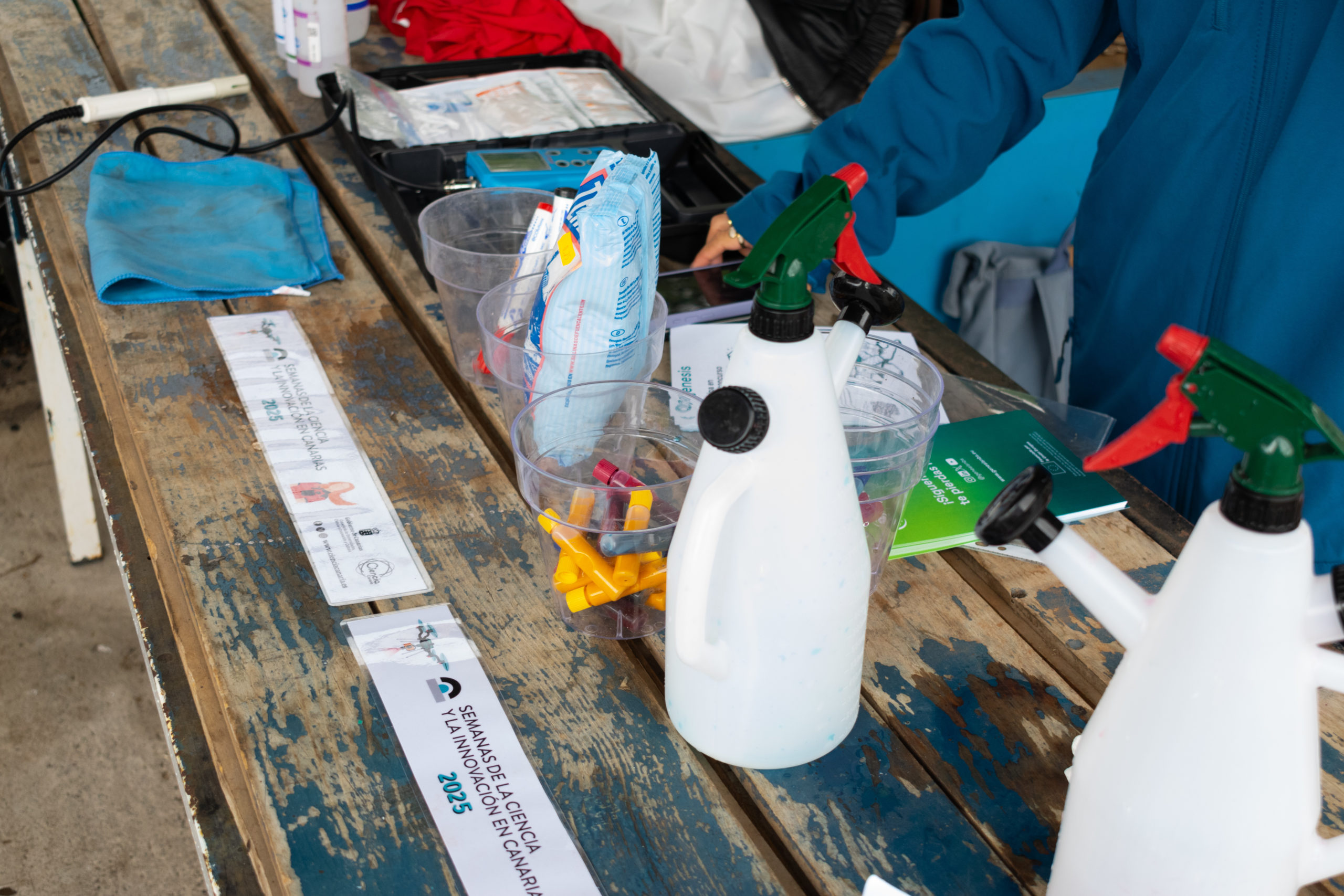
But this time we wanted to go a little further. As well as working with the model, the pupils were able to take their own measurements and check some of the parameters used to study water, such as pH, temperature and conductivity. And questions began to arise. Some related to what we were observing, whilst others led us straight to the reality of life on La Palma. We talked about water communities, how the water flowing from a tunnel is distributed, and a management system that, for many of them, was much closer to home than they realised.
Working with secondary school pupils allowed us to explore the activity in a little more depth and, above all, to make room for their questions to shape part of the conversation. The model helped us explain what happens to the water beneath the island, but this time it also enabled us to start discussing everything that happens afterwards.